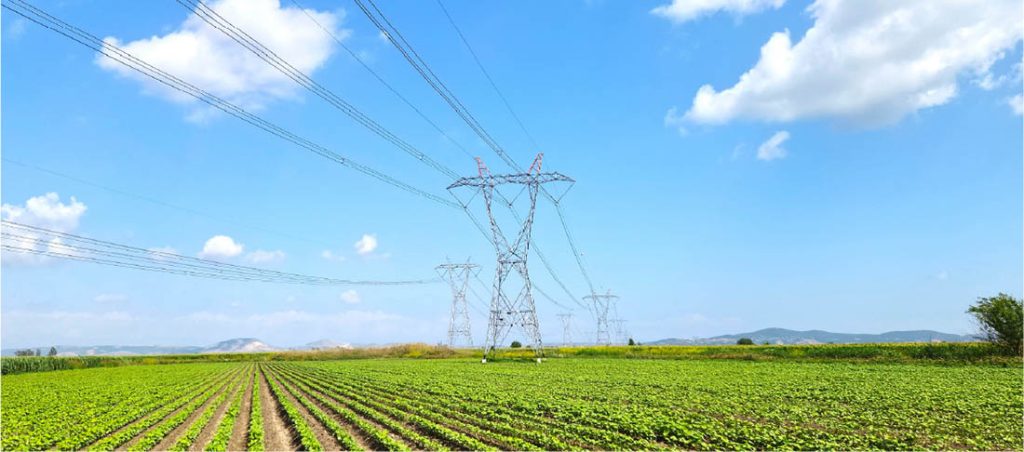
Valley Link transmission lines will run through both urban and rural areas. To keep electricity flowing safely and reliably, we maintain designated corridors, known as rights-of-way, that allow us to build, operate and maintain power lines and infrastructure.
Easements and rights-of-way go hand in hand to keep electricity flowing safely and reliably. An easement is the legal agreement that gives Valley Link permission to use a portion of private property, while the right-of-way is the physical space where transmission lines are built and maintained.
Together, they ensure we can access, inspect and maintain power lines while teaming with landowners to protect property and the environment. By working within these agreements, we keep the grid strong and communities powered.
Why rights-of-way matter
Rights-of-way are essential for keeping electricity flowing safely and reliably. These designated corridors allow utility crews to access power lines for construction, maintenance and emergency repairs.
Clear rights-of-way help prevent outages and protect public safety. When trees, structures or other obstructions are too close to transmission lines, they can cause power interruptions or even dangerous situations.
What it means for you:
- Keeping rights-of-way clear ensures crews can respond quickly during storms or emergencies.
- It reduces the risk of outages caused by vegetation or unauthorized structures.
- It helps maintain compliance with safety and reliability standards.
Guidelines for rights-of-way
- Width: Transmission rights-of-way vary by structure type and terrain, typically 50 to 500 feet wide.
- Vegetation: Plants within the right-of-way should not exceed 15 feet at maturity. Tree canopies are not allowed within the wire zone; only low-growing grasses and shrubs are permitted.
- Tree safety: Trees planted too close to power lines can cause fires or outages. Valley Link may trim or remove tall trees and treat vegetation with herbicides when necessary.
Encroachments
Before making any changes to the land within a transmission right-of-way, such as grading or building structures, please reach out to Valley Link for approval. Even if you already have a city or county permit, we still need to review your plans to ensure safety and reliability.
Getting approval first helps avoid issues later. Unauthorized work may need to be removed, which could result in additional costs for the property owner.
Examples of prohibited items include:
- Buildings, sheds, garages, decks or patios
- Pools, wells, septic systems, propane tanks
- Playground equipment, solar panels, dumpsters
- Stored vehicles, trailers or RVs
- Retaining walls, storm water ponds, burial sites
Working together
We value our relationship with landowners and strive to minimize impact on their daily lives and operations. You can expect:
- Advance notice before work begins
- Restoration after construction
- A dedicated contact for questions
If you have questions or need approval for a project, please contact us using our web form or voicemail hotline at
(304) 207-0120.
